Category: SADC Parliamentary Forum

  • SADC PF mourns the passing of Namibia’s Founding President, Dr. Sam S. Nujoma

    SADC PF mourns the passing of Namibia’s Founding President, Dr. Sam S. Nujoma

    Windhoek, Namibia – The Southern African Development Community Parliamentary Forum (SADC PF) has paid tribute to the late Dr. Sam Shafishuna Nujoma, Namibia’s Founding President, for his unwavering commitment to regional integration and democracy.

    President Nujoma died on February 8 in Windhoek, Namibia. He was 95. In a statement, the President of the SADC PF, Hon. Justin Tokely, extended condolences on behalf of the Forum to the Nujoma family, the Namibian government, and the people of Namibia.

    Dr. Nujoma, a towering figure in Namibia’s struggle for independence and a champion of Pan-African unity, was lauded as a visionary leader whose legacy extends far beyond his nation.

    Hon. Tokely described him as “a beacon of democracy, regional integration, and unity in the SADC region and beyond,” and said he had played pivotal role in advancing freedom and liberation across Southern Africa.

    The SADC PF President said under Dr. Nujoma’s leadership, Namibia played a foundational role in the establishment of the SADC Parliamentary Forum. The historic summit that launched the Forum took place in Windhoek on July 15, 1995, with Namibia generously hosting its headquarters and Secretariat to this day.

    Highlighting Dr. Nujoma’s support, Hon. Tokely recalled his inauguration of the SADC Forum House in 2001, describing it as “a testament to his unwavering support for parliamentary institutions as essential pillars of governance and democracy.”

    Hon Tokely said Dr. Nujoma’s vision for the Forum went beyond its inception, and recalled that in 1999, he boldly declared the SADC PF as “the nucleus of a future regional parliamentary assembly,” a statement that continues to inspire the Forum’s ongoing mission to foster democratic governance and inter-parliamentary cooperation.

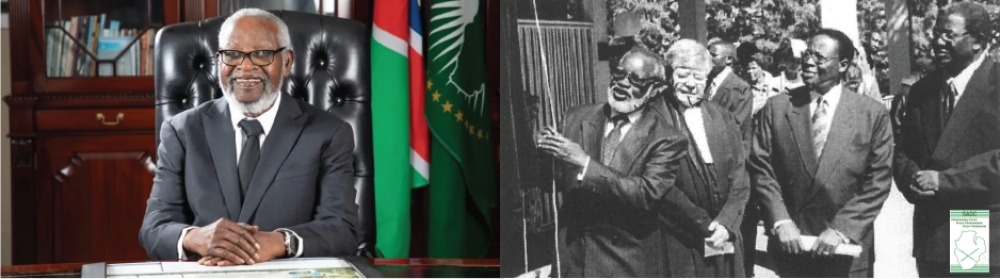
    FLASHBACK: Founding President of Namibia Dr Sam Nujoma officiates at the inauguration of SADC Parliamentary Forum House in Windhoek, Namibia on March 23, 2001. Looking on are (from left) Former Speaker of Malawi Hon Sam Mpasu, the late Speaker of the National Assembly of Namibia Dr Mose Tjitendero, Hon. Hidipo Hamumyela who was then Minister of Foreign Affairs, former SADC Executive Secretary Prego Rhamsamy, and former SADC PF Secretary General Dr Kasuka Mutukwa.

    At the 16th Plenary Assembly Session in 2004, Dr Nujoma reiterated Namibia’s readiness to host a fully-fledged SADC Parliament, demonstrating his belief in the transformative power of inter-parliamentary dialogue to promote peace, democracy, and regional development.

    “Dr. Nujoma’s visionary role was instrumental in the creation and strengthening of the SADC Parliamentary Forum. His lifelong commitment to Pan-African unity and regional integration has shaped the ethos of the Forum and left an indelible mark on the region,” Hon. Tokely, who is also the Speaker of the National Assembly of Madagascar, said.

    Beyond his contributions to the Forum, Dr. Nujoma’s advocacy for regional solidarity and social justice has been hailed as a benchmark for regional leaders. His belief in unity as a catalyst for development inspired mechanisms such as the SADC PF, which today stands as a pillar of democracy and cooperation within the region.

    Hon. Tokely also reflected on Dr. Nujoma’s enduring influence even after his retirement from active politics, describing him as a “revered pillar” of the SADC community and a guiding light for future generations.

    FROM NAMIBIA TO SADC: Former President Sam Nujoma unveils a plaque of SADC House while former Chief Justice Johan Strydom and the late Speaker of Namibia Dr Mose Tjitendero look on in March 2001.

    As the SADC PF joins the world in mourning the loss of this great leader, Hon. Tokely affirmed that Dr. Nujoma’s contributions to regional integration, peace, and democracy would forever be remembered.

    “May his exemplary legacy continue to inspire unity, democracy, and prosperity throughout the SADC region and beyond,” he said.

    *Additional reporting by Ronald Windwaai, ICT Officer at the SADC PF.

    Ends/.
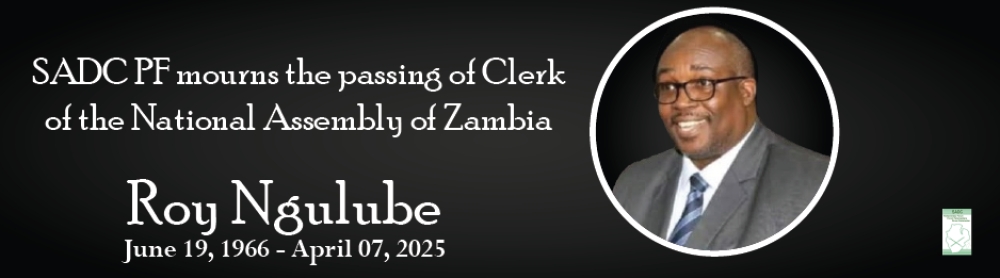
  • SADC PF mourns the passing of Clerk of the National Assembly of Zambia

    SADC PF mourns the passing of Clerk of the National Assembly of Zambia

    Windhoek, Namibia – The SADC Parliamentary Forum (SADC PF) has expressed sorrow following the death of Mr. Roy Ngulube, the Clerk of the National Assembly of Zambia, who died on 7 April 2025 while on official duty in Tashkent, Uzbekistan.

    Mr. Ngulube was in Tashkent as part of a Zambian parliamentary delegation attending the 150th Inter-Parliamentary Union (IPU) Assembly, led by Speaker Nelly Mutti.

    His sudden passing has sent shockwaves across the region, with tributes pouring in to honour a man widely respected for his dedication to parliamentary service and regional cooperation.

    In a condolence message, the Secretary General of the SADC Parliamentary Forum, Ms. Boemo Sekgoma, paid tribute to Mr. Ngulube’s extensive contributions to regional parliamentary development.

    “Mr. Ngulube was not only a consummate parliamentary professional but also a steadfast advocate for regional cooperation, innovation, and democratic governance,” she said in a statement, adding that he was also “a strong pillar” in the SADC Committee of Clerks and Secretaries General of Parliaments.

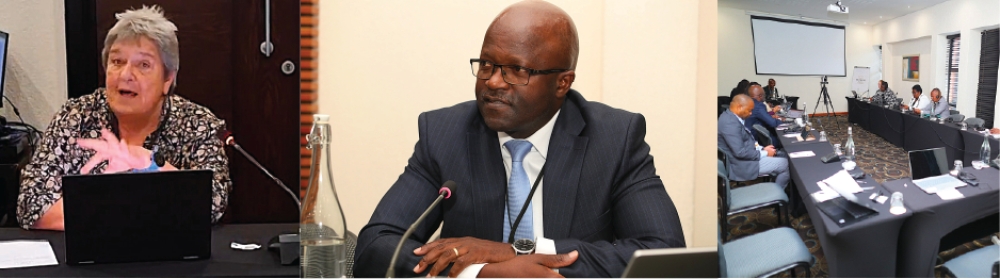
    FLASHBACK: Mr Roy Ngulube speaks during a meeting of the SADC Committee of Clerks and Secretaries General of Parliaments at the National Assembly of Angola last year.

    Mr. Ngulube’s relationship with the SADC PF dates to his tenure as Executive Assistant to the Secretary General between 2006 and 2008. In that role, he helped lay a solid foundation for inter-parliamentary collaboration within the region. His service, Ms. Sekgoma noted, was marked by “an unwavering commitment to the principles that underpin the Forum’s work.”

    Throughout a distinguished career spanning over two decades, Mr. Ngulube rose through the ranks of the Zambian Parliament. He held key positions including Assistant Committee Clerk, Deputy Clerk for both Procedure and Administration, and, Clerk of the National Assembly, a position he assumed in September 2023.

    In recent years, he remained integrally involved in the work of the SADC PF, contributing thought leadership and strategic input to several key initiatives, including the SADC PF Sweden-funded SRHR, HIV and AIDS Governance Project.

    “His participation was marked by diligence, vision, and a tireless dedication to improving legislative responsiveness to public health and social development imperatives,” said Ms. Sekgoma.

    A strong proponent of modernising parliamentary communication, Mr. Ngulube helped Zambia’s Parliament in expanding its operational radio and television broadcasting services to enhance public access and participation. He was also an early advocate for leveraging emerging technologies, including artificial intelligence, to streamline legislative processes.

    “His bold embrace of innovation was a testament to his forward-thinking leadership,” noted Ms. Sekgoma. She added, “He will be remembered for his spirit of collegiality, mentorship, and principled engagement.”

    His colleagues saluted him for championing gender equality in parliamentary leadership, ethical donor engagement, and strengthening institutional ties with development partners.

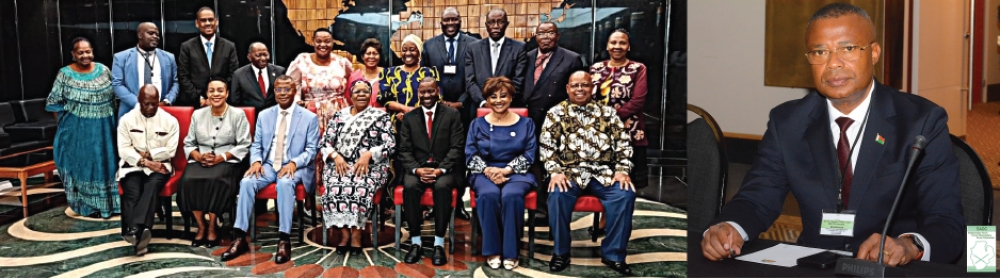
    RESPECT: Delegates attending the 150th Inter-Parliamentary Union (IPU) Assembly in Tashkent, Uzbekistan, observe a moment of silence in remembrance of the Clerk of the National Assembly of Zambia on Tuesday. Photo: Contributed

    Ms. Sekgoma said the impact of Mr Ngulube’s work was enduring.

    “We celebrate a life of dedicated service, quiet strength, and an enduring legacy. May his family and colleagues find solace in the knowledge that his work touched many lives and that his legacy will continue to inspire.”

    Delegates attending the 150th Inter-Parliamentary Union (IPU) Assembly in Tashkent, Uzbekistan, observed a moment of silence in remembrance of Mr Ngulube on Tuesday

    Ends/.

  • Experts call for better Prison oversight to combat diseases, protect rights

    Experts call for better Prison oversight to combat diseases, protect rights

    Experts this week called for better prison oversight to combat communicable diseases and protect the rights of everyone.

    They also welcomed plans to develop a SADC Model Law on Prison Oversight by the SADC Parliamentary Forum with support from Sweden.

    Ms Michaela Clayton, the interim Director for AIDS and Rights Alliance for Southern Africa (ARASA) expressed her organisation’s support for the envisaged model law. She noted that stark health inequalities and systemic neglect were fuelling the spread of infectious diseases such as tuberculosis (TB), HIV, hepatitis B and C in prisons.

    Ms Clayton was one of two resource persons when the Standing Committee on Human and Social Development and Special Programmes (HSDSP) of the SADC Parliamentary Forum met in Johannesburg, South Africa on Wednesday under the theme, “Towards developing a SADC Model Law on Prison oversight.”

    Addressing the committee, whose members are from all over the SADC region, Ms Clayton decried the disproportionately high burden of disease in prisons compared to the general population.

    “How we treat people in prisons is a reflection of the health and justice in our society,” she stated.

    “Studies in Malawi, Zambia and Botswana show that TB prevalence in prisons is ten times higher than in the general population,” she said and advocated for mandatory TB screening upon admission and regular case finding as essential tools for disease control.

    She decried the reliance on symptomatic TB diagnosis alone, saying it allows asymptomatic carriers to go undetected.

    “This enables TB to spread unchecked in already overcrowded and poorly ventilated facilities,” Ms Clayton noted.

    She argued that the grim prison conditions characterised by inadequate hygiene, poor nutrition, lack of ventilation, and disrupted power supply compound the problem.

    “TB testing needs a stable electricity supply, and even food shortages affect treatment because TB medicine taken on an empty stomach can cause severe side effects,” she explained.

     “Good prison health is good public health. When prisoners return to society untreated, they do not just bring their personal baggage. They bring the burden of disease too,” she said.

    Ms Clayton drew attention to the unique vulnerabilities faced by women, transgender people, and other key populations in prison.

    “In 2023, HIV prevalence in closed settings was twice as high as in the general population. Transgender individuals, in particular, face both a higher risk of infection and a disturbing lack of access to treatment.”

    She warned that women in prisons often suffer from sexual violence and exploitation.

    “They may be forced into sex to obtain basic goods or services,” she said, adding that this, coupled with poor access to maternal care and antiretrovirals, threatens the health of both mothers and children.

    She called for a “survivor-centred, multisectoral response to sexual violence in prisons,” with guaranteed access to medical care, psychosocial support, and reproductive health services.

    “The intersecting inequalities based on gender, HIV status, and criminalised identities must be addressed if we are serious about justice and public health,” Ms Clayton contended.

    She urged parliamentarians to see the proposed model law not as a bureaucratic exercise but as a transformative instrument. “Prison oversight is not a luxury. It is a necessity for health, for dignity, and for justice.”

    Renowned Zambian health expert Dr. George Magwende spoke on the topic, “The Importance of Prison Oversight (to Protect Prisoners’ Right to Health).”

    He traced the evolution of prison systems from ancient Mesopotamia and Egypt to modern correctional institutions and highlighted the persistence of systemic challenges which directly compromise inmates’ health and well-being.

    He explained that oversight is not merely an administrative function but a critical pillar of justice that protects human rights, exposes unconstitutional practices, promotes transparency, and ultimately restores public trust in the criminal justice system.

    He outlined numerous health-related challenges prevalent in prisons across the SADC region, including overcrowding, poor nutrition, inadequate sanitation, exposure to communicable diseases like TB, and limited access to essential medical services. According to Dr. Magwende, these conditions violate basic human rights and increase the burden on public health systems.

    He warned that without consistent and empowered oversight, conditions in prisons are likely to deteriorate further, with overcrowding and neglect leading to full-blown humanitarian and health crises.

    He identified major limitations undermining current oversight mechanisms. These include a lack of continuity among oversight teams, limited knowledge of international human rights frameworks, inadequate legal authority, and weak collaboration between parliaments and other stakeholders.

    He also cautioned against political bias and indifference among oversight personnel, calling for a culture of empathy and non-partisan commitment to justice.

    A particularly urgent issue raised was the plight of incarcerated women, especially those over the age of 45, who are often held in facilities designed for men and stripped of access to gender-sensitive services.

    Dr. Magwende outlined a rights-based approach to prison health, advocating for access to preventive care, appropriate medical screening, psychological services, and parenting support for women behind bars.

    He also supported the development of a comprehensive SADC Model Law on Prison Oversight, which would serve as a uniform tool to guide member states in aligning prison oversight practices with international human rights and public health standards.

    The Model Law, once adopted, is expected to set regional standards for prison health, human rights protection, and post-release continuity of care.

    Ends/.

  • Calls for Swift Ratification of Regional Treaties

    Calls for Swift Ratification of Regional Treaties

    Gaborone, Botswana – The Executive Secretary of SADC, Mr. Elias Magosi, has hailed the recent signing of the Agreement to amend the SADC Treaty to transform the SADC Parliamentary Forum (SADC PF) into a regional parliament by Botswana’s President Advocate Duma Boko.

    He, however, called for the active involvement of the region’s parliaments to ensure swift ratification of regional instruments.

    President Boko signed the Agreement in Gaborone on Wednesday. Mr Magosi, in delivering a vote of thanks after the signing, called it a “momentous occasion” and a critical step towards regional integration, accountability, and enhanced governance.

    He commended the leadership of President Boko, the Government of Botswana, and all those who worked over the years to reach this milestone.

    “We did not despair,” Mr Magosi said, adding, “There have been layers of leaders that have come before you to lay the foundation and here we are now with you signing this important instrument. We must commend the country and the previous leaders, but we must commend you that you came in a short space of time, and you found it very, very important to append the signature.”

    Mr Magosi stressed that the establishment of a regional parliament is not just symbolic, but a necessary evolution in SADC’s institutional development, especially for enhancing democratic governance, oversight, and the harmonisation of laws across member states.

    “It is there to make sure that it enhances governance of our region such that we also perform effectively,” he said.

    He added, “The laws that are there need an independent voice, an independent eye that makes sure that the region and the respective member states follow laws in the manner that serves our region, our member states and our citizens.”

    However, the Executive Secretary expressed deep concern over the longstanding disconnect between presidential signatures at the SADC Summit and the slow pace of ratification by member states’ parliaments – delays that have plagued several regional instruments for up to 20 years.

    “One of the goals that I have in this role (of SADC ES) is to make sure that member states sign these instruments that have been with us for quite some time,” Mr Magosi said.

    He explained, “When we approve the Agreement, there is a gap between the signature of their Excellencies at the SADC Summit and the ratification signatures. It often takes between 5 and 20 years, and we wonder what the cause of this delay is.”

    He noted that this delay is particularly alarming given that all necessary internal reviews by legal departments and ministries are assumed to be completed before presidential sign-off, and therefore, ratification should proceed without unnecessary bureaucratic hurdles.

    “SADC is only as strong as its instruments. SADC is as effective as the effectiveness of such instruments. And for those instruments to come into effect, they must be signed, they must be ratified,” he stressed.

    Mr Magosi issued a plea to Members of Parliament across the region, and urged them to actively champion the ratification and domestication of signed instruments. He stressed that MPs have a duty not only to approve but to interrogate these frameworks for the sake of their citizens and the regional bloc’s future.

    “It is a plea to all of us who are Members of Parliament from the region that indeed we interrogate these instruments and assist us to move them quickly. We can be as fast as member states can be,” he said.

    Mr Magosi expressed optimism that if remaining technical inputs are received on time, the instrument establishing the SADC Regional Parliament could be finalised and presented at the upcoming 45th SADC Summit in Madagascar.

    He called for the envisaged regional parliament to be seen and nurtured as a credible, effective, and value-adding institution that differs from other continental bodies.

    “We are developing a regional parliament. It must be seen to be effective, and we are the Members of Parliament who can make it effective… We must preserve and protect it so that it adds value to the region; it adds value to the member states.”

    With Botswana’s signing, only Mauritius remains.  The Speaker of the Parliament of Zimbabwe, Advocate Jacob Francis Nzwidamilimo Mudenda and Chairperson of the SADC PF Transformation Lobbying Team, expressed optimism that it will soon follow.

    Ends/.

  • Botswana Signs Agreement to Establish SADC Parliament

    On March 26, 2025, Botswana made history by signing the Agreement to amend the SADC Treaty, paving the way for the transformation of the SADC Parliamentary Forum into a regional parliament. This milestone marks a significant step toward enhanced legislative cooperation among member states.

  • Namibia Commended for Leadership in Regional Integration

    Namibia Commended for Leadership in Regional Integration

    By Moses Magadza

    WINDHOEK, NAMIBIA – The President of the SADC Parliamentary Forum (SADC PF), Hon. Justin Tokely, has saluted Namibia’s long-standing contribution to regional integration and parliamentary diplomacy, and called for sustained collaboration as the Forum prepares to transition into a fully-fledged regional parliament.

    Speaking during a courtesy call on Wednesday by members of the Executive Committee of the SADC PF on the newly inaugurated President of Namibia, Her Excellency Madam Netumbo Nandi-Ndaitwah, Hon. Tokely congratulated her on her historic ascension as the country’s first female Head of State.

    “Your recent assumption of office is a source of inspiration to our entire region. It represents a landmark victory for gender equality in African leadership,” he said.

    Hon. Tokely, who is also the Speaker of the National Assembly of Madagascar, commended President Nandi-Ndaitwah’s distinguished record in governance, diplomacy, and pan-African solidarity. He described her as a “freedom fighter, seasoned diplomat, and a committed servant of the people.”

    He stressed that her leadership exemplifies “dedication, integrity, and the values of African unity.”

    Paying tribute to Namibia’s previous Heads of State – the late Dr. Sam Nujoma, Dr. Hifikepunye Pohamba, and Dr. Hage Geingob – Hon. Tokely acknowledged their respective roles in laying the democratic and developmental foundations upon which modern Namibia stands.

    “Their cumulative leadership over three decades advanced peace, democracy, and regional integration,” he said.

    He recalled that under Dr. Nujoma, Namibia played a foundational role in the establishment of the SADC PF by hosting its historic inaugural summit in Windhoek in July 1995 and generously accommodating its Secretariat since 1997.

    “President Nujoma’s unwavering support for regional parliamentary diplomacy, including his vision of SADC PF as the nucleus of a future regional parliament, has guided our trajectory,” he remarked.

    He noted the legacy of President Pohamba in entrenching good governance and inclusivity, noting that “nearly half of Namibia’s parliamentarians are women, a powerful testament to your nation’s progressive gender agenda.”

    He also applauded President Geingob’s regional leadership, especially during his tenure as SADC Chairperson, which focused on deepening regional cooperation and economic integration.

    “The Namibian example stands as a beacon of democratic governance, peace, and gender-responsive leadership. Few countries can match such a consistent commitment to human rights and gender parity,” Hon. Tokely stated.

    He appreciated Namibia’s continued support to the Forum and underscored the country’s symbolic and strategic importance.

    “Namibia holds a special place in the heart of the SADC PF. It has been an unwavering pillar of support since our inception,” he stated.

    As the SADC PF works towards transforming into a regional parliament, Hon. Tokely called for intensified cooperation with Namibia, particularly in ensuring that regional integration efforts are people driven.

    “We remain committed to ensuring that the voice of our people is heard in SADC processes and that our policies reflect democratic will. The experienced leadership and input of Namibian parliamentarians continue to enrich our deliberations,” he affirmed.

    On her part, President Nandi-Ndaitwah said she was happy to “be among our Honourable Members of Parliament, particularly at a time when our region really needs the work of the parliamentarians who are our representatives.”

    Notable among the SADC PF delegation were the Speaker of the National Assembly of Angola, Carolina Cerqueira; the Speaker of then Parliament of Zimbabwe, Advocate Jacob Francis Nzwidamilimo Mudenda; the Speaker of the National Assembly of Lesotho Honourable Tlohang Sekhamane; then Speaker of the National Assembly of Zambia Honourable Nelly Mutti; Honourable Dumelang Selashando, leader of the opposition in Botswana; Honourable Shally Josepha Raymond; and SADC PF Secretary General Ms Boemo Sekgoma.

    Ends/.