Category: Standing Committees

  • SADC PF Committee proposes bold recommendations on prison oversight

    SADC PF Committee proposes bold recommendations on prison oversight

    A one-day meeting of the SADC Parliamentary Forum’s Standing Committee on Human and Social Development and Special Programmes (HSDSP) ended in Johannesburg on Wednesday with strong calls for systemic reform, strengthened oversight, and improved healthcare in prisons across the region.

    The committee (one of five standing committees of the SADC PF that met separately on Wednesday ahead of a joint session scheduled for 24 April 2025) engaged in robust deliberations informed by expert presentations and video testimonies by regional judges who had undertaken prison visits. The judges described alarming conditions marked by overcrowding, poor sanitation, and the incarceration of minor offenders alongside hardened criminals.

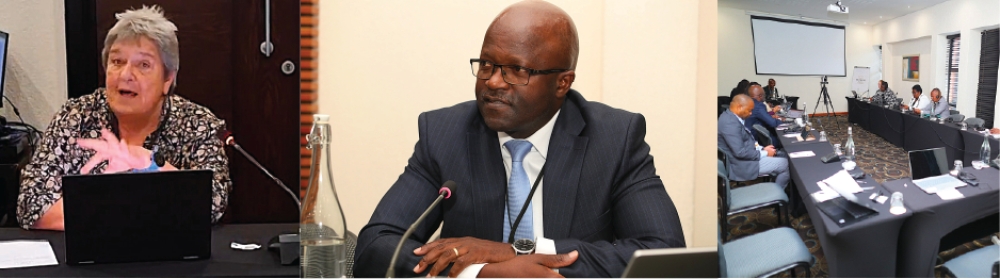
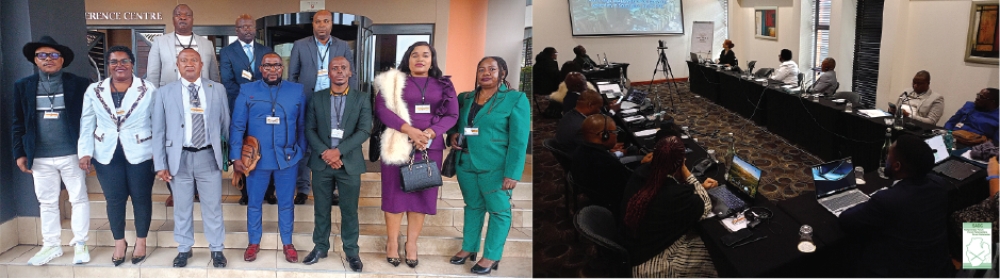
    Members of the SADC Parliamentary Forum’s HSDSP committee meet in Johannesburg

    The committee’s discussions revolved around the need for a harmonised legal framework to guide parliamentary oversight of correctional facilities in the region. A proposed Model Law on Prison Oversight which the SADC PF hopes to develop with the support of Sweden is expected to address gaps in national legislation and reinforce mechanisms for accountability and reform.

    The HSDSP Committee made a series of recommendations to the upcoming 57th Plenary Assembly, the Forum’s highest decision-making body which is set to meet in Zimbabwe in May.

    With respect to integration of prison health into public health systems, the committee urged SADC Member States to align prison healthcare with national health strategies. It noted that TB rates in prisons are up to ten times higher than in the general population.

    Parliaments were encouraged to strengthen their oversight committees, with mandatory public reporting and collaboration with civil society, national human rights institutions, and medical professionals.

    The Committee called for domestic funding in line with the Abuja Declaration’s 15% health allocation target, and for gender-sensitive healthcare services, including SRHR and trauma-informed care, in line with the UN Bangkok and Nelson Mandela Rules.

    Member States were encouraged to explore innovative financing such as earmarked taxes on tobacco and alcohol to fund prison healthcare infrastructure and rehabilitation programmes.

    The SADC PF Secretariat was urged to establish regional benchmarks for prison healthcare and foster cross-border collaboration on pooled procurement, staff training, and best practice exchanges.

    To curb overcrowding, the Committee called for legislative reforms to reduce pre-trial detention and promote alternatives to custodial sentencing.

    Additionally, the Committee recommended involving formerly incarcerated individuals in shaping policy to ensure reforms are grounded in lived realities and support reintegration.

    In closing the meeting, Honourable Mope Khati, the Chairperson, urged Members of Parliament to spearhead prison reform to their respective nations.

    He described the meeting as “historic” and invoked the African proverb: “If you want to go fast, go alone. If you want to go far, go together.”

    He declared, “Today, we have chosen to go far, together.”

    He noted that there are “400,000 lives behind bars in our region, 37% of whom are awaiting trial, with women making up 3% of this population.” 

    He said, “Our deliberations have turned cold numbers into a moral imperative. Your probing questions and thoughtful interventions have given soul to the statistics.”

    Honourable Mope Khati, the Chairperson of the
    HSDSP Committee

    Honourable Khati appreciated the contributions of Ms Michaela Clayton, the interim Director for AIDS and Rights Alliance for Southern Africa (ARASA) and renowned Zambian health expert Dr. George Magwende who provided evidence-based insights. 

    “You have shown us that rehabilitation programmes can reduce recidivism by up to 43%, that prison education initiatives can cut reoffending rates by half, and that mental health interventions can break cycles of intergenerational trauma,” he said.

    He also commended the SADC PF Secretariat for its continued leadership under Secretary General Ms Boemo Sekgoma. 

    “Your commitment to developing practical, rights-based legal frameworks continues to set our region apart,” he said, adding that the Secretariat’s work is transforming prisons from centres of punishment to places of renewal.

    Honourable Khati called on parliamentarians to leave the meeting as “educators, advocates, and reformers.” 

    He implored them to “help constituents understand that humane prisons mean safer communities; push for budget allocations that fund rehabilitation over repression; and work across party lines to implement the changes we’ve envisioned.”

    Quoting Nelson Mandela, he concluded: “It is said that no one truly knows a nation until one has been inside its jails. Today, we have chosen to know our nations better and to make them better.”

    He added, “The pages of history lie open before us, and it is up to us to write a chapter worthy of our people and our region.”

    Ends/.
  • Growing calls for stronger Parliamentary oversight of prisons in Southern Africa

    Growing calls for stronger Parliamentary oversight of prisons in Southern Africa

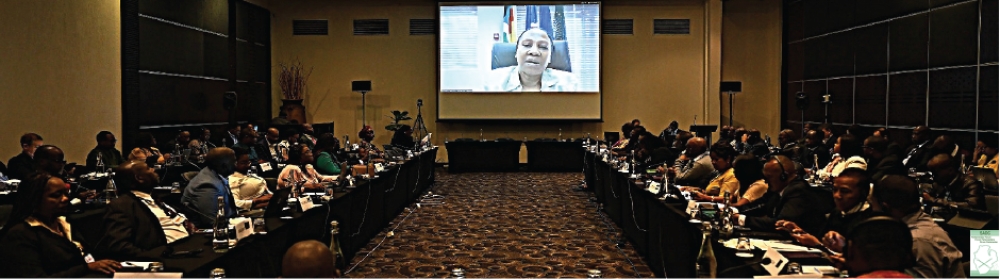
    A joint sitting of five standing committees of the SADC Parliamentary Forum began in Johannesburg South Africa on Thursday with the Secretary General of the SADC PF, Ms. Boemo Sekgoma, calling for enhanced parliamentary oversight of prisons across the Southern African region.

    The Joint Session follows separate standing committee meetings that took place on Wednesday and is deliberating on a proposed Model Law on Prison Oversight to be developed by the SADC PF with the financial support of Sweden.

    Addressing delegates at the opening of the two-day session, Ms. Sekgoma stated that the state of prison systems reflects the health of democracy and the extent to which nations uphold human rights and justice.

    “The state of a society’s prison reflects directly on the individuals in society and the extent to which they subscribe to the notion of justice,” she said.

    The session brings together Members of Parliament and technical experts to shape a framework for the region’s first Model Law dedicated to prison oversight. It builds on years of engagement by SADC PF with issues affecting incarcerated populations under initiatives like the Swedish-funded SRHR, HIV and AIDS Governance project.

    “This Joint Session is not only about drafting legal provisions,” Ms Sekgoma said via zoom, “but also about rethinking how our societies perceive and manage incarceration. It is about ensuring that prisons are rehabilitative, not repressive.”

    She said that overcrowding, inhumane conditions, poor healthcare, and systemic discrimination are rife in many prisons across the region, and warned that such conditions fuel the spread of communicable diseases like HIV, TB, and malaria, as well as organised crime.

    Citing Nelson Mandela’s famous words, she reminded delegates, “A nation should not be judged by how it treats its highest citizens, but its lowest ones.”

    She said these words resonate deeply in the context of prison reform and underscore the critical role of Parliament in holding the Executive accountable for prison conditions.

    “The Forum has identified prison oversight as a priority because current incarceration practices in the region result in a loss of human dignity and justice, even before a person has been tried. This is inconsistent with the spirit of constitutional democracy,” she said.

    Ms Sekgoma said the Model Law, once developed and adopted, will serve as a benchmark for member states to reform national laws and align with international standards, such as the UN’s Nelson Mandela Rules on the treatment of prisoners.

    “The Model Law will facilitate domestication of legal norms to improve prison conditions and institutionalize oversight through mechanisms like a dedicated parliamentary committee, independent complaints systems, and the establishment of a Commissioner of Prisons,” she explained.

    She called on parliamentarians to engage actively with technical experts participating in the session and praised their willingness to share their expertise. She also expressed appreciation to the Government of Sweden for funding the session through the SRHR Project (2023–2026), and acknowledged other partners and facilitators supporting the Forum’s work.

    She urged MPs to approach the session with openness and purpose.

    “Prison oversight is a cardinal theme which can significantly improve the state of democracy in the SADC region,” she said. “Let us consider this theme with an open mind as we address the outline of the Model Law.”

    Speaking to delegates also via zoom, the Special Rapporteur on Prisons, Conditions in Detention and Policing in Africa, Hon. Teresa Manuela, made a call for regional parliamentary action to transform prison oversight and safeguard the rights and dignity of detainees across Southern Africa.

    Speaking under the sub-theme, “The Importance of Independent Monitoring of Places of Detention and the Importance of Parliamentary Scrutiny of Detention Conditions,” Hon. Manuela stressed that the time for rhetoric had passed and that “surveillance of places of detention must become an instrument for change.”

    Drawing on decades of research and legal instruments developed since the landmark 1996 Kampala Declaration, the Special Rapporteur reminded delegates of the unfinished business in prison reform.

    “An overview of what is happening in prisons in Africa allows us to see that the work has yet to be completed,” she said.

    She cited key regional human rights instruments, including the Luanda Guidelines and the Principles on the Decriminalisation of Petty Offences in Africa, and noted their provisions that call for transparency, independent inspections, and the establishment of national institutions such as human rights commissions and parliamentary committees to examine detention facilities.

    Hon. Manuela expressed concern over the fact that few SADC Member States have ratified the Optional Protocol to the Convention Against Torture (OPCAT), which obliges the establishment of National Preventive Mechanisms. However, she praised South Africa, Mauritius, and Mozambique as regional models for advancing detention oversight.

    “The power to create or eliminate criminal offences lies exclusively with parliaments,” she stressed. She said that overcrowding is often worsened by incarceration for petty offences that should be addressed through social rather than criminal interventions.

    She urged lawmakers to seize their legislative and budgetary roles to, inter alia, decriminalise petty offences, enhance parliamentary inspections of detention centres, demand accountability for abuse, and allocate sufficient funding to improve prison conditions.

    She challenged the SADC PF to develop a SADC Model Law on Prison Oversight that promotes collaboration among oversight bodies, ensures data sharing and report consolidation, and establishes mechanisms for follow-up and enforcement of recommendations.

    “What we want,” she said, “is for the findings to become a problem and for some state body to provide an efficient and effective response.”

    Hon. Manuela called for normative provisions that would give SADC parliamentarians legal power to demand the enforcement of prisoners’ rights and hold violators accountable.

    The meeting ends on Friday.

    Ends/.

  • Experts call for better Prison oversight to combat diseases, protect rights

    Experts call for better Prison oversight to combat diseases, protect rights

    Experts this week called for better prison oversight to combat communicable diseases and protect the rights of everyone.

    They also welcomed plans to develop a SADC Model Law on Prison Oversight by the SADC Parliamentary Forum with support from Sweden.

    Ms Michaela Clayton, the interim Director for AIDS and Rights Alliance for Southern Africa (ARASA) expressed her organisation’s support for the envisaged model law. She noted that stark health inequalities and systemic neglect were fuelling the spread of infectious diseases such as tuberculosis (TB), HIV, hepatitis B and C in prisons.

    Ms Clayton was one of two resource persons when the Standing Committee on Human and Social Development and Special Programmes (HSDSP) of the SADC Parliamentary Forum met in Johannesburg, South Africa on Wednesday under the theme, “Towards developing a SADC Model Law on Prison oversight.”

    Addressing the committee, whose members are from all over the SADC region, Ms Clayton decried the disproportionately high burden of disease in prisons compared to the general population.

    “How we treat people in prisons is a reflection of the health and justice in our society,” she stated.

    “Studies in Malawi, Zambia and Botswana show that TB prevalence in prisons is ten times higher than in the general population,” she said and advocated for mandatory TB screening upon admission and regular case finding as essential tools for disease control.

    She decried the reliance on symptomatic TB diagnosis alone, saying it allows asymptomatic carriers to go undetected.

    “This enables TB to spread unchecked in already overcrowded and poorly ventilated facilities,” Ms Clayton noted.

    She argued that the grim prison conditions characterised by inadequate hygiene, poor nutrition, lack of ventilation, and disrupted power supply compound the problem.

    “TB testing needs a stable electricity supply, and even food shortages affect treatment because TB medicine taken on an empty stomach can cause severe side effects,” she explained.

     “Good prison health is good public health. When prisoners return to society untreated, they do not just bring their personal baggage. They bring the burden of disease too,” she said.

    Ms Clayton drew attention to the unique vulnerabilities faced by women, transgender people, and other key populations in prison.

    “In 2023, HIV prevalence in closed settings was twice as high as in the general population. Transgender individuals, in particular, face both a higher risk of infection and a disturbing lack of access to treatment.”

    She warned that women in prisons often suffer from sexual violence and exploitation.

    “They may be forced into sex to obtain basic goods or services,” she said, adding that this, coupled with poor access to maternal care and antiretrovirals, threatens the health of both mothers and children.

    She called for a “survivor-centred, multisectoral response to sexual violence in prisons,” with guaranteed access to medical care, psychosocial support, and reproductive health services.

    “The intersecting inequalities based on gender, HIV status, and criminalised identities must be addressed if we are serious about justice and public health,” Ms Clayton contended.

    She urged parliamentarians to see the proposed model law not as a bureaucratic exercise but as a transformative instrument. “Prison oversight is not a luxury. It is a necessity for health, for dignity, and for justice.”

    Renowned Zambian health expert Dr. George Magwende spoke on the topic, “The Importance of Prison Oversight (to Protect Prisoners’ Right to Health).”

    He traced the evolution of prison systems from ancient Mesopotamia and Egypt to modern correctional institutions and highlighted the persistence of systemic challenges which directly compromise inmates’ health and well-being.

    He explained that oversight is not merely an administrative function but a critical pillar of justice that protects human rights, exposes unconstitutional practices, promotes transparency, and ultimately restores public trust in the criminal justice system.

    He outlined numerous health-related challenges prevalent in prisons across the SADC region, including overcrowding, poor nutrition, inadequate sanitation, exposure to communicable diseases like TB, and limited access to essential medical services. According to Dr. Magwende, these conditions violate basic human rights and increase the burden on public health systems.

    He warned that without consistent and empowered oversight, conditions in prisons are likely to deteriorate further, with overcrowding and neglect leading to full-blown humanitarian and health crises.

    He identified major limitations undermining current oversight mechanisms. These include a lack of continuity among oversight teams, limited knowledge of international human rights frameworks, inadequate legal authority, and weak collaboration between parliaments and other stakeholders.

    He also cautioned against political bias and indifference among oversight personnel, calling for a culture of empathy and non-partisan commitment to justice.

    A particularly urgent issue raised was the plight of incarcerated women, especially those over the age of 45, who are often held in facilities designed for men and stripped of access to gender-sensitive services.

    Dr. Magwende outlined a rights-based approach to prison health, advocating for access to preventive care, appropriate medical screening, psychological services, and parenting support for women behind bars.

    He also supported the development of a comprehensive SADC Model Law on Prison Oversight, which would serve as a uniform tool to guide member states in aligning prison oversight practices with international human rights and public health standards.

    The Model Law, once adopted, is expected to set regional standards for prison health, human rights protection, and post-release continuity of care.

    Ends/.

  • Standing Committee on Food, Agriculture, and Natural Resources Evaluates PIDA Progress

    Within the framework of the Programme for Infrastructure Development in Africa (PIDA), the committee assesses advancements in transport, energy, and industry sectors among SADC Member States, aiming to bolster regional development and integration.

  • Standing Committee on Democratisation, Governance, and Human Rights Highlights Technology’s Role

    Emphasizing the theme “Leveraging Technology and Innovation for Smart, Inclusive, and Responsive Parliaments,” the committee underscores the importance of digital transformation in strengthening parliamentary functions and citizen engagement.

  • Standing Committee on Trade, Industry, Finance, and Investment (TIFI) to Discuss AfCFTA

    The TIFI Standing Committee is scheduled to deliberate on leveraging the African Continental Free Trade Area (AfCFTA) for post-COVID economic recovery. Discussions will focus on enhancing intra-African trade and industrialization strategies