Blog

  • BOTSWANA SIGNS THE AGREEMENT AMENDING THE SADC TREATY TO ESTABLISH THE SADC PARLIAMENT

    BOTSWANA SIGNS THE AGREEMENT AMENDING THE SADC TREATY TO ESTABLISH THE SADC PARLIAMENT

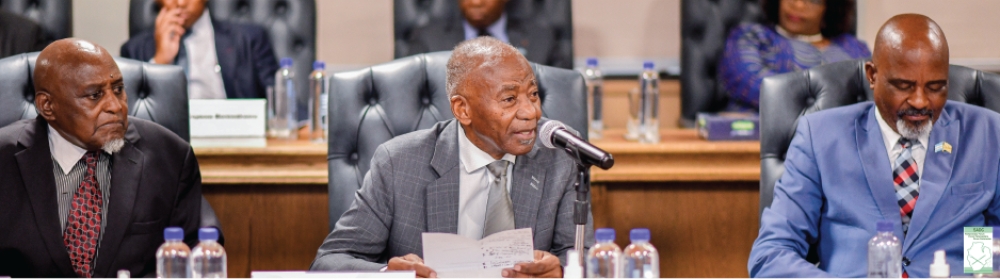
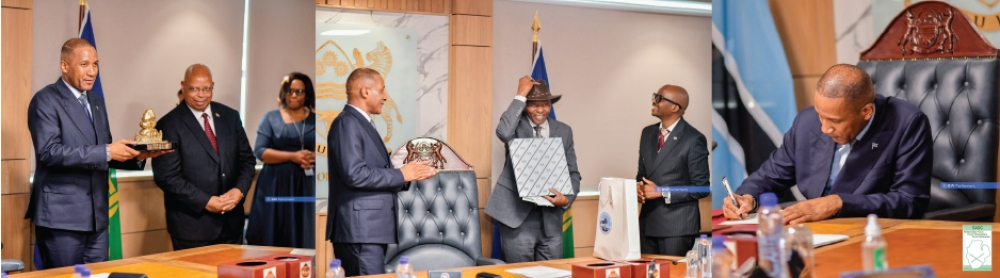
    The 26th March 2025, will go into history as the day Botswana appended her signature to the agreement amending the Southern African Development Community (SADC) Treaty, to establish the SADC Parliament as one of the SADC Institutions. This agreement was signed by the President of the Republic of Botswana, Advocate Duma Gideon Boko, and it makes the total number of the SADC member states who have already signed, thirteen. 

    In his address, President Boko explained that, by appending his signature on behalf of the Republic of Botswana, the SADC Region will be placed in a better position to harmonise its laws and practices. He asserted that, there was never any doubt at any moment in his understanding that, Botswana refused to sign and said credit should be given to the country.

    President Boko emphasized the critical role the SADC PF has played. He cited that, the law making process is not easy as a lot goes into the need to be informed by data and to get the benefit of expert advice. The President shared that, often, the National Parliaments lack the resources and the expertise to engage in the process of law making as meaningfully as they would want to , stating that, SADC PF has borne the bulk of the responsibility of seeking expert intervention, establishing extensive research and, establishing the data mapping out the challenges that need to be remedied. ‘SADC PF has played this role and played it well’, he said.

    The Speaker of the National Assembly of Botswana, Honourable Dithapelo L. Keorapetse, expressed great joy, pride and honour when articulating a brief on the journey of the Parliament of Botswana and the SADC PF and on how this milestone of almost three decades was achieved. He shared that the journey began as far as 1997 when Botswana and other SADC member states, committed to the common regional cause of promoting democracy, and good governance joined the SADC PF. He explained that, prior to that, there was no regional mechanism for the Parliamentarians of the SADC member states to debate and inform SADC about the views of their citizens on democracy, development and other issues affecting them. The Speaker indicated that, in the case of Botswana, the conversation on the establishment of the SADC Parliament took off in 2010 during the 10th Parliament, through a motion sponsored by Hon. Edwin Batshu. The motion was debated and passed. ‘More significant strides were made in 2018 and beyond and there were calls for Botswana to sign the agreement as a key partner, more so that the SADC Secretariat is based in Gaborone, Botswana’, he explained. 

    According to the Speaker, SADC Parliament entered into force in July 2024 after attaining the required threshold of twelve members. He said despite this, other member states felt that it was important to be considerate and inclusive and convince Botswana to sign, given its role and status as one of the founders of the frontline states. The Speaker shared that, the transformation of the SADC PF into a regional parliament will improve the citizens’ participation in regional affairs and further promote the member states’ compliance with the SADC principles and guidelines governing democratic election. Furthermore, the Speaker expressed that it will boost the representation of women through the SADC Gender and Development protocol which calls for 50:50 gender parity in national Parliaments by 2030.

    The Chairman of the Strategic Lobbying Team for the transformation of the SADC PF into a Regional Parliament, Hon. Advocate Jacob Francis Nzwidamilimo Mudenda who is also the Speaker of the National Assembly of Zimbabwe, asserted that, the process of transformation has made a huge leap forward by the signature from Botswana. He said, it represents a huge leap in many respects; the first being, Botswana is a seat of the SADC Secretariat which is at the heart of all SADC operations, and that, Botswana’s signature gives renewed confidence and impetus to the transformation agenda of the Forum. ‘Botswana is a democracy on the rise and its signature demonstrates that the transformation agenda rides on a pedestal inclusivity that, no member and SADC country should be left out in the process,’ he said.

    Botswana became the thirteenth member state to sign after the President of the Republic of Madagascar, His Excellency, Andry Nirina Rajoelina recently signed the agreement.  This leaves Mauritius as the only country which has not yet signed the agreement.

    #budgetspeech2025

    #13thparliament

    #botswanaspeaks

    #ourparliamentourpride

    #BWMindsetChange
  • SADC PF mourns the passing of Namibia’s Founding President, Dr. Sam S. Nujoma

    SADC PF mourns the passing of Namibia’s Founding President, Dr. Sam S. Nujoma

    Windhoek, Namibia – The Southern African Development Community Parliamentary Forum (SADC PF) has paid tribute to the late Dr. Sam Shafishuna Nujoma, Namibia’s Founding President, for his unwavering commitment to regional integration and democracy.

    President Nujoma died on February 8 in Windhoek, Namibia. He was 95. In a statement, the President of the SADC PF, Hon. Justin Tokely, extended condolences on behalf of the Forum to the Nujoma family, the Namibian government, and the people of Namibia.

    Dr. Nujoma, a towering figure in Namibia’s struggle for independence and a champion of Pan-African unity, was lauded as a visionary leader whose legacy extends far beyond his nation.

    Hon. Tokely described him as “a beacon of democracy, regional integration, and unity in the SADC region and beyond,” and said he had played pivotal role in advancing freedom and liberation across Southern Africa.

    The SADC PF President said under Dr. Nujoma’s leadership, Namibia played a foundational role in the establishment of the SADC Parliamentary Forum. The historic summit that launched the Forum took place in Windhoek on July 15, 1995, with Namibia generously hosting its headquarters and Secretariat to this day.

    Highlighting Dr. Nujoma’s support, Hon. Tokely recalled his inauguration of the SADC Forum House in 2001, describing it as “a testament to his unwavering support for parliamentary institutions as essential pillars of governance and democracy.”

    Hon Tokely said Dr. Nujoma’s vision for the Forum went beyond its inception, and recalled that in 1999, he boldly declared the SADC PF as “the nucleus of a future regional parliamentary assembly,” a statement that continues to inspire the Forum’s ongoing mission to foster democratic governance and inter-parliamentary cooperation.

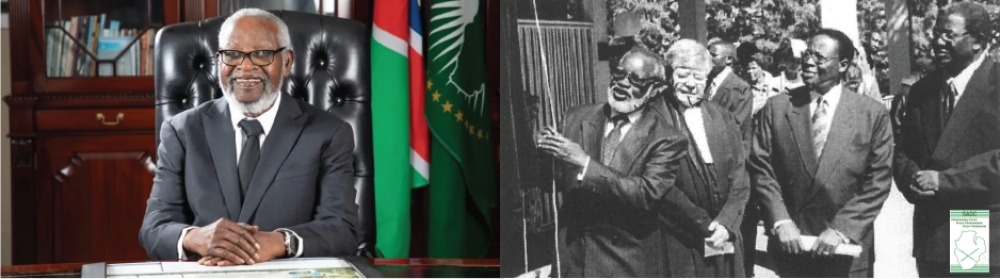
    FLASHBACK: Founding President of Namibia Dr Sam Nujoma officiates at the inauguration of SADC Parliamentary Forum House in Windhoek, Namibia on March 23, 2001. Looking on are (from left) Former Speaker of Malawi Hon Sam Mpasu, the late Speaker of the National Assembly of Namibia Dr Mose Tjitendero, Hon. Hidipo Hamumyela who was then Minister of Foreign Affairs, former SADC Executive Secretary Prego Rhamsamy, and former SADC PF Secretary General Dr Kasuka Mutukwa.

    At the 16th Plenary Assembly Session in 2004, Dr Nujoma reiterated Namibia’s readiness to host a fully-fledged SADC Parliament, demonstrating his belief in the transformative power of inter-parliamentary dialogue to promote peace, democracy, and regional development.

    “Dr. Nujoma’s visionary role was instrumental in the creation and strengthening of the SADC Parliamentary Forum. His lifelong commitment to Pan-African unity and regional integration has shaped the ethos of the Forum and left an indelible mark on the region,” Hon. Tokely, who is also the Speaker of the National Assembly of Madagascar, said.

    Beyond his contributions to the Forum, Dr. Nujoma’s advocacy for regional solidarity and social justice has been hailed as a benchmark for regional leaders. His belief in unity as a catalyst for development inspired mechanisms such as the SADC PF, which today stands as a pillar of democracy and cooperation within the region.

    Hon. Tokely also reflected on Dr. Nujoma’s enduring influence even after his retirement from active politics, describing him as a “revered pillar” of the SADC community and a guiding light for future generations.

    FROM NAMIBIA TO SADC: Former President Sam Nujoma unveils a plaque of SADC House while former Chief Justice Johan Strydom and the late Speaker of Namibia Dr Mose Tjitendero look on in March 2001.

    As the SADC PF joins the world in mourning the loss of this great leader, Hon. Tokely affirmed that Dr. Nujoma’s contributions to regional integration, peace, and democracy would forever be remembered.

    “May his exemplary legacy continue to inspire unity, democracy, and prosperity throughout the SADC region and beyond,” he said.

    *Additional reporting by Ronald Windwaai, ICT Officer at the SADC PF.

    Ends/.

  • SADC PF standing Committee to meet over Food Security and Sustainable Agriculture

    SADC PF standing Committee to meet over Food Security and Sustainable Agriculture

    The SADC PF Standing Committee on Food, Agriculture and Natural Resources (FANR) will hold its meeting from 19 to 21 May 2024, in Johannesburg, South Africa under the theme: “Promoting Climate Action in Parliaments to strengthen Food Security and Sustainable Agriculture; Enhance SRHR Outcomes; and Govern Natural Resources Effectively.’’

    Malawi Member of Parliament Hon. Ishmael Ndaila Onani, is Chairperson of the FANR Standing Committee, whose meeting is in preparation for the 55th Plenary Assembly Session of the SADC PF that will take place from 1 to 7 July 2024 in Angola.

    FANR Programme Manager Ms Rachel Mundilo says the Committee’s mandate is to deal with matters related to agriculture, fisheries, forestry and wildlife, water and environment, energy, transport, tourism, ICTs, meteorology, food security and natural resources.

    “The committee encourages the implementation of programmes aimed at enhancing food security through disaster preparedness, access, safety, and nutritional value, fair and sustainable use of natural resources, and the development of institutional frameworks” Ms Mundilo says.

    The meeting happens when the SADC region is facing multifaceted challenges due to climate change, including disruptions in food systems, threats to agriculture and natural resources, and impacts on sexual and reproductive health and rights (SRHR).

    The challenges necessitate a comprehensive approach to building resilience that integrates various sectors. The meeting brings together parliamentarians, experts, and stakeholders to discuss strategies for mitigating the impacts of climate change and advancing sustainable development.

    It will focus on three thematic areas: Food Security and Sustainable Agriculture, Sexual and Reproductive Health and Rights (SRHR) and Natural resource governance.

    Climate change has a profound impact on agricultural productivity, water availability, and food security through irregular rainfall patterns, droughts, floods, and rising temperatures, hence the region faces chronic food shortages due to climate change, inadequate infrastructure, and limited resources for smallholder farmers.

    Climate change has a range of impacts that can exacerbate existing vulnerabilities, particularly affecting SRHR for women and marginalised groups. For example, extreme weather events and food insecurities can lead to increased risks of violence against women, higher maternal mortality rates, and reduced access to SRHR services.

    SADC PF Secretary General Ms Boemo Sekgoma says the energy transition in Southern Africa is vital for enhancing energy security, fostering economic development, combating climate change, and achieving sustainable development.

    The shift from traditional fossil fuels to renewable energy sources is now more relevant due to pressing global challenges and opportunities. The region’s abundant critical minerals are essential for clean energy technologies and there is a pressing need to determine how parliaments can support sustainable exploitation of these resources for the benefit of their constituents.

    One of the resource persons for this meeting is Ms Chikondi Chabvuta, the Regional Advocacy Advisor for Southern Africa with CARE International. In an interview, she said the meeting was timely and necessary given that the SADC region is facing impacts of climate change with at least three countries declaring drought.

    “The interconnected nature of climate action, food security, sustainable agriculture, sexual and reproductive health and rights (SRHR), and natural resource governance cannot be over-emphasised as these issues are not siloed; they are deeply intertwined and addressing one can have positive ripple effects on the others,” she said.

    She reasoned that promoting sustainable agriculture practices can mitigate climate change impacts, improve food security, and enhance SRHR outcomes by empowering communities, particularly women, to make informed choices about their reproductive health.

    On current and emerging challenges related to climate change in the SADC Region, Ms Chabvuta cited increasingly frequent cyclones, flooding, and droughts jinxing sustainable development goals.

    “The (SADC) region is among the most vulnerable in the world to climate change. We have over 40 million people reported as food insecure, with women and girls being the most vulnerable to climate impacts in the region,” she noted.

    She added: “The entire region is at risk of climate change, but due to unique vulnerabilities and different exposures to climate change, Mozambique experiences frequent tropical cyclones and flooding, Zimbabwe deals with both droughts and floods, Malawi faces food insecurity due to erratic rainfall patterns, Namibia and Botswana grapple with droughts and water scarcity, Madagascar contends with cyclones and other natural disasters. South Africa, Zambia, and Eswatini also face climate-related challenges.”

    In this connection, Ms Chabvuta said SADC MPs had their work cut out and could intensify their oversight on food security and SRHR, ensure related budget allocations are made and share knowledge with their constituents on climate change and its impacts.

    “Failure to address climate change, food security and SRHR will lead to economic loss, where more budgets will be spent in response to climate impacts. It will lead to loss of livelihoods, degradation of the environment, deterioration of health, environmental degradation, and a missed chance of a sustainable future. Action needs to happen now!” she said.

    She explained that climate change is a multisectoral issue because its impacts cut across various aspects of development.

    “Climate change influences the spread of diseases, heat-related illnesses, and malnutrition for health. It affects air quality, water availability, and food security, impacting public health systems,” she noted.

    She added: “Changing weather patterns affect crop yields, livestock, and fisheries. Food production, distribution, and access are all interconnected with climate conditions. Climate change alters precipitation patterns, leading to droughts or floods. Water scarcity affects agriculture, energy production, and human consumption. Rising temperatures, habitat loss, and extreme weather events threaten biodiversity. Ecosystem services (such as pollination and soil fertility) are at risk.”

    Ms Chabvuta said other impacts of climate change affect infrastructure and urban planning with sea-level rises, storms, and extreme temperatures impacting infrastructure resilience.   Additionally, climate change disrupts supply chains, affects insurance costs, and poses risks to economic stability and growth.

    “Vulnerable populations (such as low-income communities, indigenous groups, and marginalized individuals) suffer disproportionately from climate impacts. Addressing equity is crucial,” she said.

    The discussions will further centre on how SADC countries can transition to cleaner energy sources while also boosting their economies.

    Ends/.

  • SADC PF mourns the passing of Clerk of the National Assembly of Zambia

    SADC PF mourns the passing of Clerk of the National Assembly of Zambia

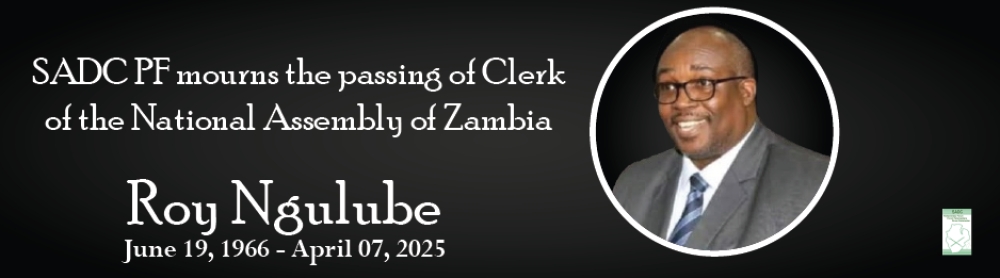
    Windhoek, Namibia – The SADC Parliamentary Forum (SADC PF) has expressed sorrow following the death of Mr. Roy Ngulube, the Clerk of the National Assembly of Zambia, who died on 7 April 2025 while on official duty in Tashkent, Uzbekistan.

    Mr. Ngulube was in Tashkent as part of a Zambian parliamentary delegation attending the 150th Inter-Parliamentary Union (IPU) Assembly, led by Speaker Nelly Mutti.

    His sudden passing has sent shockwaves across the region, with tributes pouring in to honour a man widely respected for his dedication to parliamentary service and regional cooperation.

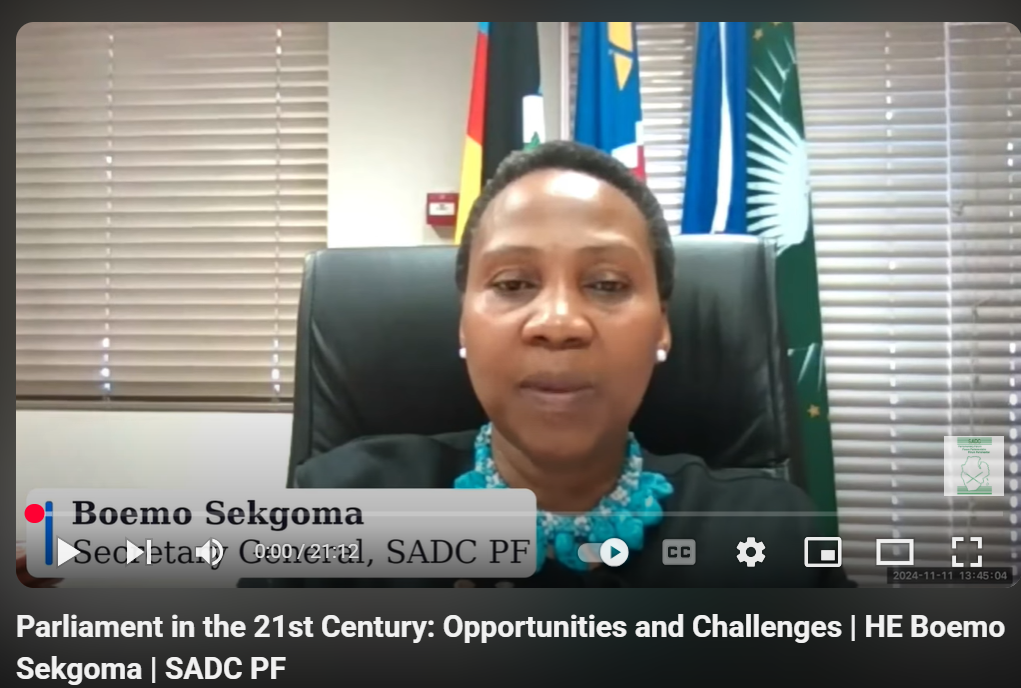
    In a condolence message, the Secretary General of the SADC Parliamentary Forum, Ms. Boemo Sekgoma, paid tribute to Mr. Ngulube’s extensive contributions to regional parliamentary development.

    “Mr. Ngulube was not only a consummate parliamentary professional but also a steadfast advocate for regional cooperation, innovation, and democratic governance,” she said in a statement, adding that he was also “a strong pillar” in the SADC Committee of Clerks and Secretaries General of Parliaments.

    FLASHBACK: Mr Roy Ngulube speaks during a meeting of the SADC Committee of Clerks and Secretaries General of Parliaments at the National Assembly of Angola last year.

    Mr. Ngulube’s relationship with the SADC PF dates to his tenure as Executive Assistant to the Secretary General between 2006 and 2008. In that role, he helped lay a solid foundation for inter-parliamentary collaboration within the region. His service, Ms. Sekgoma noted, was marked by “an unwavering commitment to the principles that underpin the Forum’s work.”

    Throughout a distinguished career spanning over two decades, Mr. Ngulube rose through the ranks of the Zambian Parliament. He held key positions including Assistant Committee Clerk, Deputy Clerk for both Procedure and Administration, and, Clerk of the National Assembly, a position he assumed in September 2023.

    In recent years, he remained integrally involved in the work of the SADC PF, contributing thought leadership and strategic input to several key initiatives, including the SADC PF Sweden-funded SRHR, HIV and AIDS Governance Project.

    “His participation was marked by diligence, vision, and a tireless dedication to improving legislative responsiveness to public health and social development imperatives,” said Ms. Sekgoma.

    A strong proponent of modernising parliamentary communication, Mr. Ngulube helped Zambia’s Parliament in expanding its operational radio and television broadcasting services to enhance public access and participation. He was also an early advocate for leveraging emerging technologies, including artificial intelligence, to streamline legislative processes.

    “His bold embrace of innovation was a testament to his forward-thinking leadership,” noted Ms. Sekgoma. She added, “He will be remembered for his spirit of collegiality, mentorship, and principled engagement.”

    His colleagues saluted him for championing gender equality in parliamentary leadership, ethical donor engagement, and strengthening institutional ties with development partners.

    RESPECT: Delegates attending the 150th Inter-Parliamentary Union (IPU) Assembly in Tashkent, Uzbekistan, observe a moment of silence in remembrance of the Clerk of the National Assembly of Zambia on Tuesday. Photo: Contributed

    Ms. Sekgoma said the impact of Mr Ngulube’s work was enduring.

    “We celebrate a life of dedicated service, quiet strength, and an enduring legacy. May his family and colleagues find solace in the knowledge that his work touched many lives and that his legacy will continue to inspire.”

    Delegates attending the 150th Inter-Parliamentary Union (IPU) Assembly in Tashkent, Uzbekistan, observed a moment of silence in remembrance of Mr Ngulube on Tuesday

    Ends/.

  • SADC PF Committee proposes bold recommendations on prison oversight

    SADC PF Committee proposes bold recommendations on prison oversight

    A one-day meeting of the SADC Parliamentary Forum’s Standing Committee on Human and Social Development and Special Programmes (HSDSP) ended in Johannesburg on Wednesday with strong calls for systemic reform, strengthened oversight, and improved healthcare in prisons across the region.

    The committee (one of five standing committees of the SADC PF that met separately on Wednesday ahead of a joint session scheduled for 24 April 2025) engaged in robust deliberations informed by expert presentations and video testimonies by regional judges who had undertaken prison visits. The judges described alarming conditions marked by overcrowding, poor sanitation, and the incarceration of minor offenders alongside hardened criminals.

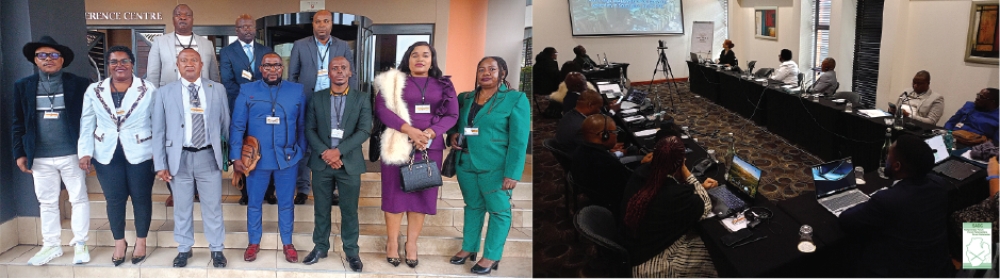
    Members of the SADC Parliamentary Forum’s HSDSP committee meet in Johannesburg

    The committee’s discussions revolved around the need for a harmonised legal framework to guide parliamentary oversight of correctional facilities in the region. A proposed Model Law on Prison Oversight which the SADC PF hopes to develop with the support of Sweden is expected to address gaps in national legislation and reinforce mechanisms for accountability and reform.

    The HSDSP Committee made a series of recommendations to the upcoming 57th Plenary Assembly, the Forum’s highest decision-making body which is set to meet in Zimbabwe in May.

    With respect to integration of prison health into public health systems, the committee urged SADC Member States to align prison healthcare with national health strategies. It noted that TB rates in prisons are up to ten times higher than in the general population.

    Parliaments were encouraged to strengthen their oversight committees, with mandatory public reporting and collaboration with civil society, national human rights institutions, and medical professionals.

    The Committee called for domestic funding in line with the Abuja Declaration’s 15% health allocation target, and for gender-sensitive healthcare services, including SRHR and trauma-informed care, in line with the UN Bangkok and Nelson Mandela Rules.

    Member States were encouraged to explore innovative financing such as earmarked taxes on tobacco and alcohol to fund prison healthcare infrastructure and rehabilitation programmes.

    The SADC PF Secretariat was urged to establish regional benchmarks for prison healthcare and foster cross-border collaboration on pooled procurement, staff training, and best practice exchanges.

    To curb overcrowding, the Committee called for legislative reforms to reduce pre-trial detention and promote alternatives to custodial sentencing.

    Additionally, the Committee recommended involving formerly incarcerated individuals in shaping policy to ensure reforms are grounded in lived realities and support reintegration.

    In closing the meeting, Honourable Mope Khati, the Chairperson, urged Members of Parliament to spearhead prison reform to their respective nations.

    He described the meeting as “historic” and invoked the African proverb: “If you want to go fast, go alone. If you want to go far, go together.”

    He declared, “Today, we have chosen to go far, together.”

    He noted that there are “400,000 lives behind bars in our region, 37% of whom are awaiting trial, with women making up 3% of this population.” 

    He said, “Our deliberations have turned cold numbers into a moral imperative. Your probing questions and thoughtful interventions have given soul to the statistics.”

    Honourable Mope Khati, the Chairperson of the
    HSDSP Committee

    Honourable Khati appreciated the contributions of Ms Michaela Clayton, the interim Director for AIDS and Rights Alliance for Southern Africa (ARASA) and renowned Zambian health expert Dr. George Magwende who provided evidence-based insights. 

    “You have shown us that rehabilitation programmes can reduce recidivism by up to 43%, that prison education initiatives can cut reoffending rates by half, and that mental health interventions can break cycles of intergenerational trauma,” he said.

    He also commended the SADC PF Secretariat for its continued leadership under Secretary General Ms Boemo Sekgoma. 

    “Your commitment to developing practical, rights-based legal frameworks continues to set our region apart,” he said, adding that the Secretariat’s work is transforming prisons from centres of punishment to places of renewal.

    Honourable Khati called on parliamentarians to leave the meeting as “educators, advocates, and reformers.” 

    He implored them to “help constituents understand that humane prisons mean safer communities; push for budget allocations that fund rehabilitation over repression; and work across party lines to implement the changes we’ve envisioned.”

    Quoting Nelson Mandela, he concluded: “It is said that no one truly knows a nation until one has been inside its jails. Today, we have chosen to know our nations better and to make them better.”

    He added, “The pages of history lie open before us, and it is up to us to write a chapter worthy of our people and our region.”

    Ends/.

  • Growing calls for stronger Parliamentary oversight of prisons in Southern Africa

    Growing calls for stronger Parliamentary oversight of prisons in Southern Africa

    A joint sitting of five standing committees of the SADC Parliamentary Forum began in Johannesburg South Africa on Thursday with the Secretary General of the SADC PF, Ms. Boemo Sekgoma, calling for enhanced parliamentary oversight of prisons across the Southern African region.

    The Joint Session follows separate standing committee meetings that took place on Wednesday and is deliberating on a proposed Model Law on Prison Oversight to be developed by the SADC PF with the financial support of Sweden.

    Addressing delegates at the opening of the two-day session, Ms. Sekgoma stated that the state of prison systems reflects the health of democracy and the extent to which nations uphold human rights and justice.

    “The state of a society’s prison reflects directly on the individuals in society and the extent to which they subscribe to the notion of justice,” she said.

    The session brings together Members of Parliament and technical experts to shape a framework for the region’s first Model Law dedicated to prison oversight. It builds on years of engagement by SADC PF with issues affecting incarcerated populations under initiatives like the Swedish-funded SRHR, HIV and AIDS Governance project.

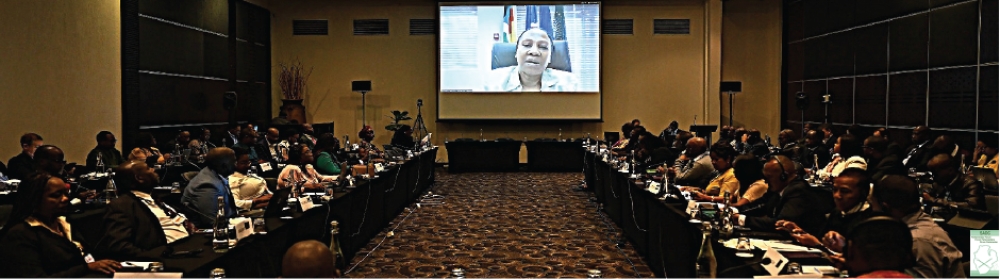
    “This Joint Session is not only about drafting legal provisions,” Ms Sekgoma said via zoom, “but also about rethinking how our societies perceive and manage incarceration. It is about ensuring that prisons are rehabilitative, not repressive.”

    She said that overcrowding, inhumane conditions, poor healthcare, and systemic discrimination are rife in many prisons across the region, and warned that such conditions fuel the spread of communicable diseases like HIV, TB, and malaria, as well as organised crime.

    Citing Nelson Mandela’s famous words, she reminded delegates, “A nation should not be judged by how it treats its highest citizens, but its lowest ones.”

    She said these words resonate deeply in the context of prison reform and underscore the critical role of Parliament in holding the Executive accountable for prison conditions.

    “The Forum has identified prison oversight as a priority because current incarceration practices in the region result in a loss of human dignity and justice, even before a person has been tried. This is inconsistent with the spirit of constitutional democracy,” she said.

    Ms Sekgoma said the Model Law, once developed and adopted, will serve as a benchmark for member states to reform national laws and align with international standards, such as the UN’s Nelson Mandela Rules on the treatment of prisoners.

    “The Model Law will facilitate domestication of legal norms to improve prison conditions and institutionalize oversight through mechanisms like a dedicated parliamentary committee, independent complaints systems, and the establishment of a Commissioner of Prisons,” she explained.

    She called on parliamentarians to engage actively with technical experts participating in the session and praised their willingness to share their expertise. She also expressed appreciation to the Government of Sweden for funding the session through the SRHR Project (2023–2026), and acknowledged other partners and facilitators supporting the Forum’s work.

    She urged MPs to approach the session with openness and purpose.

    “Prison oversight is a cardinal theme which can significantly improve the state of democracy in the SADC region,” she said. “Let us consider this theme with an open mind as we address the outline of the Model Law.”

    Speaking to delegates also via zoom, the Special Rapporteur on Prisons, Conditions in Detention and Policing in Africa, Hon. Teresa Manuela, made a call for regional parliamentary action to transform prison oversight and safeguard the rights and dignity of detainees across Southern Africa.

    Speaking under the sub-theme, “The Importance of Independent Monitoring of Places of Detention and the Importance of Parliamentary Scrutiny of Detention Conditions,” Hon. Manuela stressed that the time for rhetoric had passed and that “surveillance of places of detention must become an instrument for change.”

    Drawing on decades of research and legal instruments developed since the landmark 1996 Kampala Declaration, the Special Rapporteur reminded delegates of the unfinished business in prison reform.

    “An overview of what is happening in prisons in Africa allows us to see that the work has yet to be completed,” she said.

    She cited key regional human rights instruments, including the Luanda Guidelines and the Principles on the Decriminalisation of Petty Offences in Africa, and noted their provisions that call for transparency, independent inspections, and the establishment of national institutions such as human rights commissions and parliamentary committees to examine detention facilities.

    Hon. Manuela expressed concern over the fact that few SADC Member States have ratified the Optional Protocol to the Convention Against Torture (OPCAT), which obliges the establishment of National Preventive Mechanisms. However, she praised South Africa, Mauritius, and Mozambique as regional models for advancing detention oversight.

    “The power to create or eliminate criminal offences lies exclusively with parliaments,” she stressed. She said that overcrowding is often worsened by incarceration for petty offences that should be addressed through social rather than criminal interventions.

    She urged lawmakers to seize their legislative and budgetary roles to, inter alia, decriminalise petty offences, enhance parliamentary inspections of detention centres, demand accountability for abuse, and allocate sufficient funding to improve prison conditions.

    She challenged the SADC PF to develop a SADC Model Law on Prison Oversight that promotes collaboration among oversight bodies, ensures data sharing and report consolidation, and establishes mechanisms for follow-up and enforcement of recommendations.

    “What we want,” she said, “is for the findings to become a problem and for some state body to provide an efficient and effective response.”

    Hon. Manuela called for normative provisions that would give SADC parliamentarians legal power to demand the enforcement of prisoners’ rights and hold violators accountable.

    The meeting ends on Friday.

    Ends/.

  • Experts call for better Prison oversight to combat diseases, protect rights

    Experts call for better Prison oversight to combat diseases, protect rights

    Experts this week called for better prison oversight to combat communicable diseases and protect the rights of everyone.

    They also welcomed plans to develop a SADC Model Law on Prison Oversight by the SADC Parliamentary Forum with support from Sweden.

    Ms Michaela Clayton, the interim Director for AIDS and Rights Alliance for Southern Africa (ARASA) expressed her organisation’s support for the envisaged model law. She noted that stark health inequalities and systemic neglect were fuelling the spread of infectious diseases such as tuberculosis (TB), HIV, hepatitis B and C in prisons.

    Ms Clayton was one of two resource persons when the Standing Committee on Human and Social Development and Special Programmes (HSDSP) of the SADC Parliamentary Forum met in Johannesburg, South Africa on Wednesday under the theme, “Towards developing a SADC Model Law on Prison oversight.”

    Addressing the committee, whose members are from all over the SADC region, Ms Clayton decried the disproportionately high burden of disease in prisons compared to the general population.

    “How we treat people in prisons is a reflection of the health and justice in our society,” she stated.

    “Studies in Malawi, Zambia and Botswana show that TB prevalence in prisons is ten times higher than in the general population,” she said and advocated for mandatory TB screening upon admission and regular case finding as essential tools for disease control.

    She decried the reliance on symptomatic TB diagnosis alone, saying it allows asymptomatic carriers to go undetected.

    “This enables TB to spread unchecked in already overcrowded and poorly ventilated facilities,” Ms Clayton noted.

    She argued that the grim prison conditions characterised by inadequate hygiene, poor nutrition, lack of ventilation, and disrupted power supply compound the problem.

    “TB testing needs a stable electricity supply, and even food shortages affect treatment because TB medicine taken on an empty stomach can cause severe side effects,” she explained.

     “Good prison health is good public health. When prisoners return to society untreated, they do not just bring their personal baggage. They bring the burden of disease too,” she said.

    Ms Clayton drew attention to the unique vulnerabilities faced by women, transgender people, and other key populations in prison.

    “In 2023, HIV prevalence in closed settings was twice as high as in the general population. Transgender individuals, in particular, face both a higher risk of infection and a disturbing lack of access to treatment.”

    She warned that women in prisons often suffer from sexual violence and exploitation.

    “They may be forced into sex to obtain basic goods or services,” she said, adding that this, coupled with poor access to maternal care and antiretrovirals, threatens the health of both mothers and children.

    She called for a “survivor-centred, multisectoral response to sexual violence in prisons,” with guaranteed access to medical care, psychosocial support, and reproductive health services.

    “The intersecting inequalities based on gender, HIV status, and criminalised identities must be addressed if we are serious about justice and public health,” Ms Clayton contended.

    She urged parliamentarians to see the proposed model law not as a bureaucratic exercise but as a transformative instrument. “Prison oversight is not a luxury. It is a necessity for health, for dignity, and for justice.”

    Renowned Zambian health expert Dr. George Magwende spoke on the topic, “The Importance of Prison Oversight (to Protect Prisoners’ Right to Health).”

    He traced the evolution of prison systems from ancient Mesopotamia and Egypt to modern correctional institutions and highlighted the persistence of systemic challenges which directly compromise inmates’ health and well-being.

    He explained that oversight is not merely an administrative function but a critical pillar of justice that protects human rights, exposes unconstitutional practices, promotes transparency, and ultimately restores public trust in the criminal justice system.

    He outlined numerous health-related challenges prevalent in prisons across the SADC region, including overcrowding, poor nutrition, inadequate sanitation, exposure to communicable diseases like TB, and limited access to essential medical services. According to Dr. Magwende, these conditions violate basic human rights and increase the burden on public health systems.

    He warned that without consistent and empowered oversight, conditions in prisons are likely to deteriorate further, with overcrowding and neglect leading to full-blown humanitarian and health crises.

    He identified major limitations undermining current oversight mechanisms. These include a lack of continuity among oversight teams, limited knowledge of international human rights frameworks, inadequate legal authority, and weak collaboration between parliaments and other stakeholders.

    He also cautioned against political bias and indifference among oversight personnel, calling for a culture of empathy and non-partisan commitment to justice.

    A particularly urgent issue raised was the plight of incarcerated women, especially those over the age of 45, who are often held in facilities designed for men and stripped of access to gender-sensitive services.

    Dr. Magwende outlined a rights-based approach to prison health, advocating for access to preventive care, appropriate medical screening, psychological services, and parenting support for women behind bars.

    He also supported the development of a comprehensive SADC Model Law on Prison Oversight, which would serve as a uniform tool to guide member states in aligning prison oversight practices with international human rights and public health standards.

    The Model Law, once adopted, is expected to set regional standards for prison health, human rights protection, and post-release continuity of care.

    Ends/.

  • “Are we really here?” – Katjavivi reacts to transformation of SADC PF

    “Are we really here?” – Katjavivi reacts to transformation of SADC PF

    Gaborone, Botswana – In Luke 2:25-32, Simeon, a devout man who had been promised by the Holy Spirit that he would not die before he had seen Christ, said – upon holding the infant Jesus in his hands –  “Sovereign Lord, you may now dismiss your servant in peace. For my eyes have seen salvation.”

    Last week, in a similar moment thick with emotion and decades of anticipation, Prof. Peter Katjavivi, the former Speaker of the National Assembly of Namibia and a member of the SADC Parliamentary Forum (SADC PF) Transformation Lobby Team, delivered a stirring address at the signing of the Agreement to Amend the SADC Treaty to establish the SADC PF as an official institution of the regional bloc.

    Addressing an audience that included Botswana’s President Advocate Duma Gideon Boko (SC), Speakers, parliamentarians and other dignitaries, Prof. Katjavivi paused – gripped by the significance of the moment.

    “Sometimes I feel, are we here? Is this the event that brought us together?” he asked. “I think I’m convinced we are indeed here to witness something so important.”

    The Agreement, signed in Gaborone under the leadership of President Boko, represents a historic milestone in the decades-long journey to formally recognise the SADC PF as a full-fledged institution of SADC. Prof. Katjavivi, one of the Forum’s most resolute advocates, made it clear that the journey had been arduous, but worth every step.

    Botswana became the 14th SADC country to sign the Agreement. The region now awaits Mauritius’ signature.

    “We have struggled hard to achieve something that we feel is very important. Parliament cannot be left behind as we are discussing the critical issue of regional integration,” Prof Katjavivi said.

    The former Speaker reflected on the path that brought the region to the 14th signature.

    “We have been dreaming about this, but it has become a reality,” he said. “As we look back and look to the future, this is something that will define who we are as a SADC community.”

    Prof Katjavivi is exiting active political service. The milestone carried deep personal significance for him, and he described the moment as a fitting conclusion to his years of service and advocacy.

    “It has been long coming. It is finally here, and I am extremely proud,” he said. “We say that our job is done to a certain extent – but of course we need to consolidate this achievement.”

    He said that the envisaged regional parliament must serve the people of Southern Africa and position itself on the continental and global stage.

    “A regional parliament is an important vehicle for regional integration. It will enable us to fully serve our citizens within the SADC region and the continent of Africa at large by networking with other regional parliaments… drawing upon the experiences that might be relevant for us.”

    He said that Namibia remains a dedicated host country to the SADC PF and would continue supporting its evolution. Recounting a conversation with Namibia’s current President, H.E. Netumbo Nandi-Ndaitwah, he said: “Before coming here, I alerted the current President… She simply said, ‘I wish you well and thank you for sharing this important event with me.’”

    For Prof Katjavivi, the signing by Botswana represents the fulfillment of a shared dream; one that entailed tireless lobbying, unwavering hope and collective belief.

    “This is a very important development that we hold dear to our hearts,” he stated. “From here, we’ll continue to mobilise the best we can to make sure the SADC regional parliament lives up to the expectations of our people,” he said to applause.

    The SADC PF  Transformation Lobby Group was comprised of the Hon. Speaker Adv. Jacob Francis Nzwidamilimo Mudenda, Chairperson, from Zimbabwe; Hon. Pedro Sebastião, proxy for Hon Speaker Carolina Cerqueira, from Angola; Hon. Former Speaker Phandu Tombola Chaha Skelemani, from Botswana; Hon Speaker Prof. Katjavivi from Namibia; Hon. Speaker Angela Thokozile Didiza from South Africa; and Rt. Hon. Speaker Nelly Butete Kashumba Mutti, SC, MP, FAPRA, from Zambia.

    Ends/.

  • Standing Committee on Food, Agriculture, and Natural Resources Evaluates PIDA Progress

    Within the framework of the Programme for Infrastructure Development in Africa (PIDA), the committee assesses advancements in transport, energy, and industry sectors among SADC Member States, aiming to bolster regional development and integration.